It starts with making your bed every morning.
USA Baseball’s 12U National Team has earned nine gold medals on the international stage since it’s inception in 2013, but this level of greatness doesn’t happen overnight. It’s a culmination of little moments and actions, both on and off the field.
Players are taught to set out their clothes and pack their bags the night before, push their chairs in when they stand up, and turn in their laundry right side out at the end of each day. Although these tasks have nothing to do with their baseball skills, manager Wes Brooks says the ability to form habits and pay attention to detail translates to on the field performance.
“Once we finish eating, we push our chairs in, and those are just little self-discipline things that we build in each day to see if we can trust that player in a moment to be able to get the bunt down in the sixth inning,” Brooks said. “That's when I say, hey, if you leave that chair out, then we know that you're not going to pay attention to the details and the fundamentals of getting that sac bunt down in the sixth inning when we need it.”
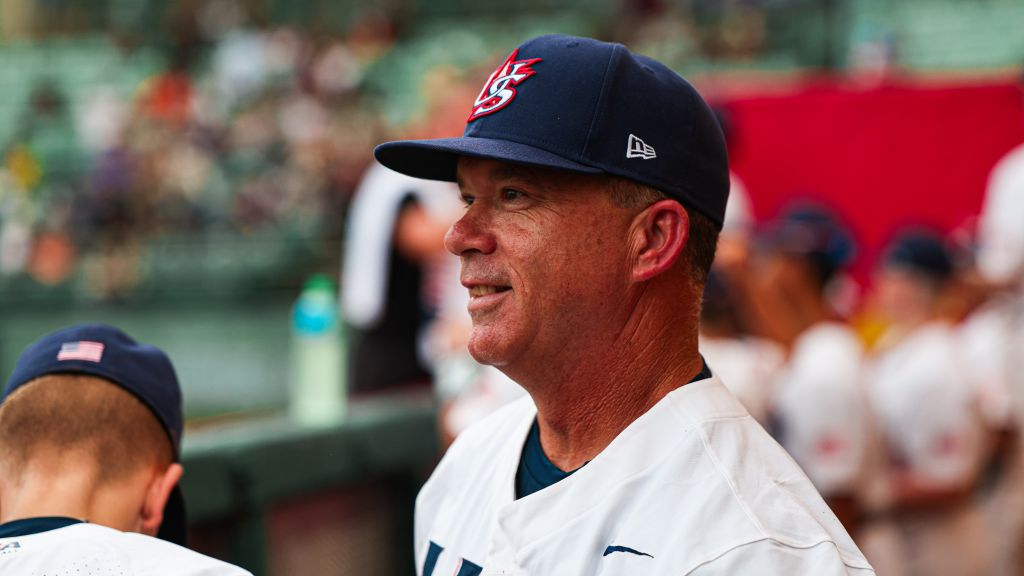
Accountability and discipline are a critical part of Brooks’ coaching philosophy, and he makes these expectations clear on day one – the Team USA standard, otherwise called the Gold Standard, is something players will be taught and expected to uphold on and off the field.
“How well you turn in your laundry to the person that's doing your laundry is just as important as the bunt in the fifth inning. It's just as important as getting the last out,” he said.
He found that teaching players to build habits early, both on and off the field, benefits them as their athletic careers progress. When Brooks first began coaching at Oxford High School in Alabama, he connected with the middle school and quickly realized that the 10- to 12-year-old age group is the perfect age to start implementing these ideas.
He describes the young athletes as “sponges.” At this stage they want to be coached, he said, they want to soak in everything the coaches are telling them. For some, they’re the best player on their team or in their region, so they’re not getting coached as hard because they’re the standard that the rest of the team strives for. But when they come to training camp, Brooks and his staff raise the bar.
“We're trying to set a new standard and expectations for them to live up to,” he said. “It's so precious to see them really trying to do the things that we ask them to do.”
After winning back-to-back gold medals in 2024 and 2025, expectations for Brooks and the team are high heading into the WBSC U-12 Pan American Championship in November after winning back-to-back gold medals in 2024 and 2025. Especially since Brooks is stepping into a new role as manager.
He spent the last two years as the pitching coach under Bryan Madsen, and last year his staff recorded a tournament best 1.62 ERA at the World Baseball Softball Confederation (WBSC) U-12 Baseball World Cup. This year, Madsen is working with the Women’s National Team Training Camp, and passing the torch. After working alongside Madsen and seeing how he operates and leads the team to victory, Brooks is eager to begin this new chapter.
“I can't think of a greater leader. Someone who's fought for our country, and just a stand-up gentleman to his family and his kids,” Brooks said. “The way he handled himself in a tough environment last year when we had some adversity come our way, I'll obviously take some of those strong traits and hopefully do the same.”
This year’s coaching staff includes returning assistant Erick Quesada as well as two new faces, Kyle Howell and David Houseton. Howell will take over Brooks’ former role as pitching coach, and he looks forward to using his new position to pass along his knowledge.
“Our mission here is to create an environment for players and coaches to educate them, energize them, and empower them to be excellent, or to live a lifestyle of excellence,” Brooks said. “I want to be such a great example that eventually all three of our assistants end up being a national team head coach.”
For Brooks, coaching isn’t just about developing great baseball players, it’s about developing great leaders, teammates, and most importantly, great people. He hopes that the skills and habits they develop stick with them far beyond their baseball careers.
“I can do so much more with this title other than just trying to help them win a gold medal,” he said. “I want to focus on being a gold medal person, living out that gold medal standard, and building champions first.”
One way Brooks empowers his players and coaches is using the acronym GREAT, which emphasizes the five core values that the team can fall back on regardless of the situation. These guiding principles help him teach his players to respond to highs and lows gracefully – in baseball and in life – because the appropriate response will eventually lead to the desired outcome.

“At some point, you'll get the job that you always wanted. You'll have an opportunity to win a gold medal,” he said. “You'll have an opportunity come up in your life and if you continue to do the right thing in those moments – and that is responding in the appropriate way, and not disrespecting any person, anything, any moment in life – you'll get rewarded.”
But success won’t come easily, and when faced with adversity, Brooks teaches his players to take it one step, or one pitch, at a time. Release, relax, and refocus after each one, he says, just keep moving forward.
“I can't be upset at a pitcher for giving up a home run, because I'm not going to call the best pitch on the next batter,” Brooks said. “I've got to release, relax, refocus, and move on to the next batter, and be the best version of myself so that I can give our team the best chance to succeed.”
To Brooks, “Always Forward” is more than USA Baseball’s slogan, it's a way of life. If he has a bad day, he doesn’t let it linger, he moves onto the next. He operates day by day and pitch by pitch.
At night, Brooks sets his “opportunity clock,” not his alarm clock. Each morning is a new opportunity to get up and dominate the day, which always begins with making his bed
More Stories