At its core, the game of baseball is a demanding sport that often requires even the best players to be flexible and change certain aspects of their playing style. It’s a game where the little things often carry the most weight, and minor details can make or break a player. Ultimately, baseball requires an ongoing cycle of adaptation to maintain success.
For youth ball players, changes to their respective games are normal. Whether it’s their batting stance, glove positioning, footwork, etc., growing and learning is an essential part of any game — especially in baseball. But no shift tests that ability to adapt quite like stepping onto a full-sized field for the first time.
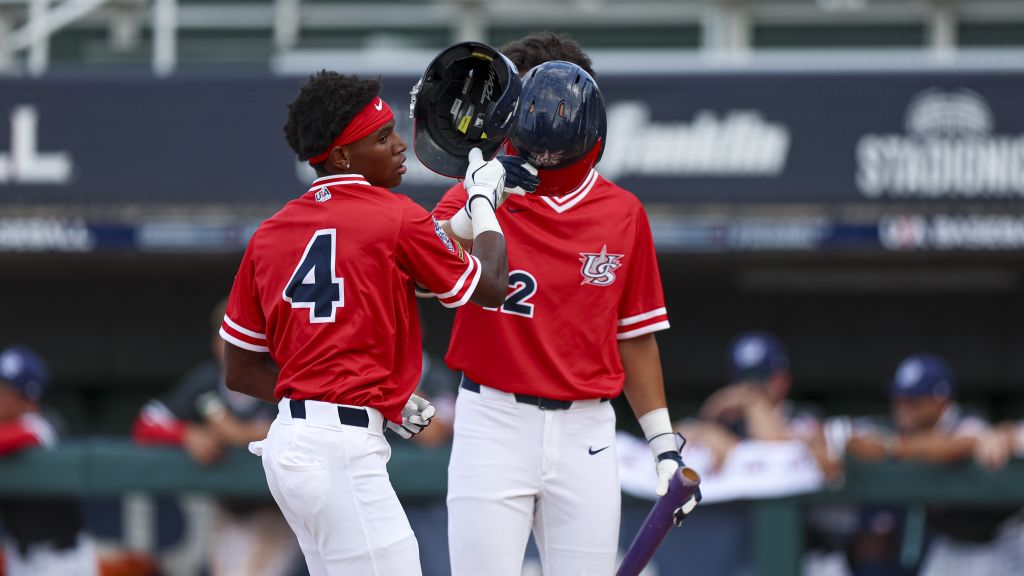
The full-sized field is relatively new for participants at the 2026 13U/14U Athlete Development Program (ADP), but that's what this week is all about. The ADP is a development program that bridges the gap between USA Baseball’s national teams and identification events.
Transitioning from youth dimensions to a standard diamond with just over 60’ from the mound to plate and 90’ basepaths can be a sudden reality check. The game that felt quick and easy their entire lives has abruptly become unfamiliar. And every player and each position on the field is affected in their own way.
With the mound being further from the plate, young pitchers often struggle to get the ball over the plate early on, which pairs with a recognizable decrease in velocity. For batters, the added distance and slightly longer duration it takes the ball to cross the plate, can affect the timing and rhythm of their swing. In the field, they can hardly rely solely on arm strength to make plays; proper and excellent mechanics are necessary to make plays that used to be effortless.
For Jace Winston, a catcher competing in this year’s ADP, taking in that massive shift for the first time was an intimidating experience.
“I was definitely a little nervous,” Winston said. “I saw that [400] sign out there and thought there was no way I could do this.”
Winston isn’t the only player out at the ADP navigating this transition. Infielder Charley Flores is experiencing his own shift at the shortstop position from a physical and mental side.
“Trying to make the throws while getting used to [the field] being so much bigger and having a lot more time to get it and not rushing everything,” Flores said. “I sometimes let my emotions get to me on the smaller field, and now on the big field I can’t afford to do that. The game is just gonna keep going and going, so definitely just controlling my emotions.”
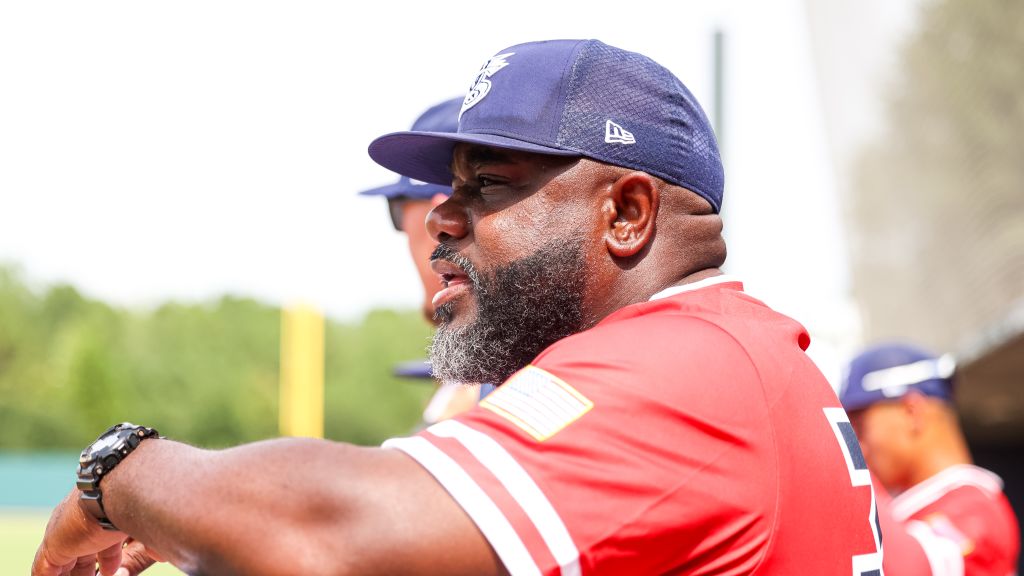
No one understands the reality of this adjustment better than a coach. This week at ADP, former gold-winning coach for the 2024 12U National Team, Josh Ellison, is back serving as a coach for Team Red.
The former Seattle Mariners draftee currently serves as the head baseball coach at Chaparral High School in Scottsdale, Arizona. For Ellison, developing his players means preparing them for the next step in their playing careers, including the jump in field size.
“The increased dimensions speed up how fast [the players] have got to get rid of the ball,” Ellison explained. “Their internal clock has to play faster to account for the speed of the game being quicker.”
Perhaps the toughest adjustment with the distance increasing lies on the shoulders of the pitchers. The game is already physically demanding, but adding the mental warfare to the equation only adds to the challenge pitchers take on. Right-handed pitcher Jacob Eason explained his newfound approach while adjusting to the new field.
“I’ve had to grow up and change my attitude, just get more mature about the game, learn more about it. Now that we’re on the big field and playing against better players, I’ve had to give them better pitches.”
It’s a task that is much easier said than done for most pitchers.
With years of coaching experience under his belt, Ellison has learned to find ways to get the most out of his guys even through times of adversity. When dealing with pitchers adjusting to the longer distance, Ellison’s message is clear.
“Guys struggle sometimes, maybe they lose a couple of miles per hour on their velocity coming to the full-size field. I just tell them to continue to do the little things that have given them success, and the arm strength and velocity will come to the forefront.”
For players of this caliber, there will certainly be obstacles to overcome throughout their careers, but there’s no question these athletes are capable of adjusting quicker than anyone. Behind the dish, Winston has quickly found that the expanded area behind home plate can strengthen his game and his approach on defense.
“[The field transition] helped me blocking wise. I know if I let a ball go, it will be a free bag [for the baserunner]. So I’ve had to make sure to keep it in front of me.”
With the expanded dimensions of the field, the offensive side of the game can be frustrating for young players. It often requires players to completely change their approach at the plate. Rather than swinging for the fences, coaches advise their hitters to swing for contact and focus on the contact itself.
Ellison understands the frustration young players face, but reiterates the importance of emphasizing the little things during every at-bat.
“Regardless of whether or not you are hitting the ball out of the ballpark, that doesn’t matter. What does matter is that you stay inside the ball, and on top of it. Your hits, doubles, home runs, all that stuff will come in time. But how you go about making hard contact on every swing is most important.”
At the end of the day, this adjustment is part of the process for these young players. But what separates them from the rest of the other ballplayers looking to make it big is the unique opportunity to compete alongside and against other premier talent under USA Baseball’s umbrella of events — including this week during the ADP.
Both Flores and Eason discussed the importance that an event like this has on their development as they work through this adjustment.
“Seeing how everybody moves and plays the game, how they throw, how they move, and how they react to failure — it’s awesome to see and it helps me a lot,” Flores said.
“It helps me grow, seeing how they play and can help me adjust my game and be better,” Eason explained. “I can look up to them as brothers and become a better man and player.”
That shared accountability among players is mirrored by the dedicated mentorship on the coaching staff. For Ellison, guiding these athletes through one of the biggest transitions of their young careers, goes far deeper than teaching mechanics on a full-sized field. It’s also about giving back to the game that shaped them.
“Having us coaches come out here and not only help better the game, but to see the athletes and help them reach their full potential like somebody did for us when we were their age.”
On the big field, the diamond gets wider and the game appears to move faster. But with the right brotherhood and guidance, the transition should surely become a launching pad for the future baseball stars.