The Hairston family has accomplished almost everything baseball has to offer.
From the Negro Leagues to the major leagues, four generations have carried the family name through nearly a century of baseball history.
Each generation has added a new chapter, building one of the sport’s most celebrated legacies.
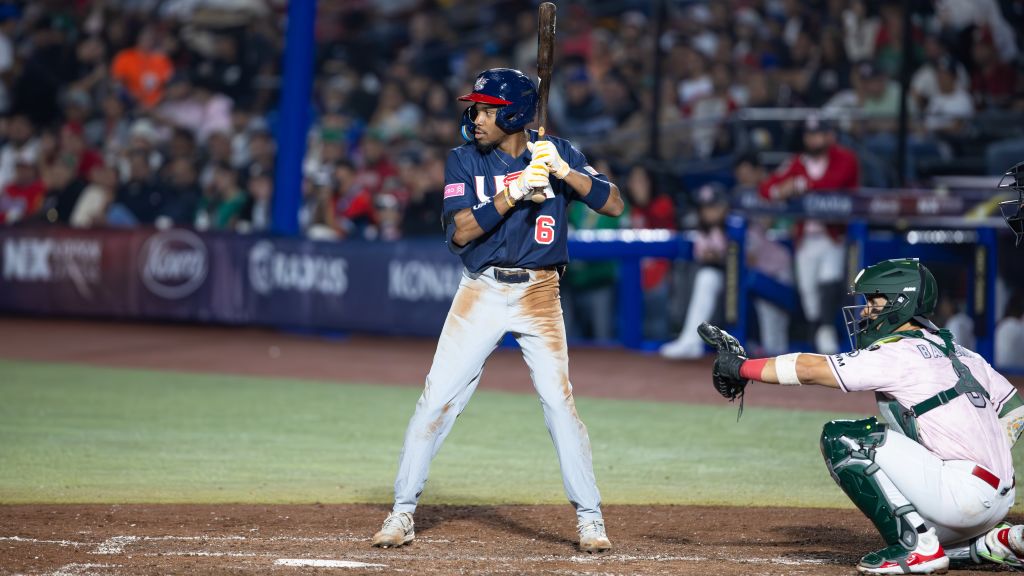
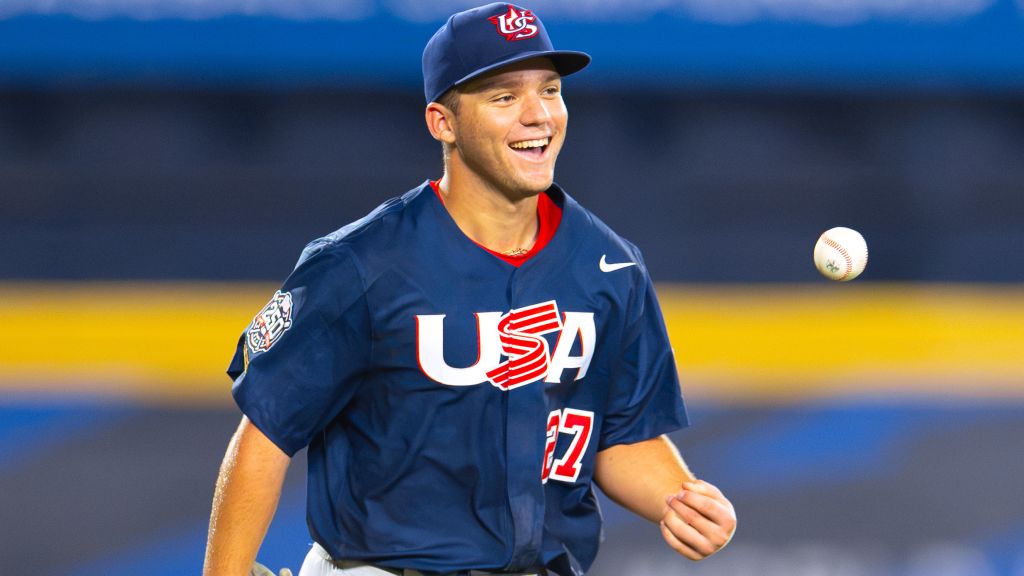
Yet when Landon Hairston earned a spot on the 2026 USA Baseball Collegiate National Team, he found himself accomplishing something no member of his family had before.
Representing Team USA.
“It was funny,” Hairston said. “I was on the phone with my dad and my mom and I was telling them that I made the team and they were super proud. My dad pointed out that I was the first one in my family to represent U-S-A on a national team."
For over eighty years, the Hairston name has been woven into baseball history. The foundation of that legacy was built by Sam Hairston, who starred in the Negro Leagues from 1944-1948 before breaking barriers as the first African American player in Chicago White Sox history. His sons, Jerry Sr. and John, followed him to the major leagues, while another generation continued the tradition with brothers Jerry Jr. and Scott Hairston, each carving out successful big league careers of their own.
If Landon eventually reaches the major leagues, he would become the fourth generation of Hairstons to reach the highest level of professional baseball, making the family the first in baseball history to accomplish that feat.
But for now, Landon has already created a first of his own.
Growing up in the Hairston household meant growing up around clubhouses, batting cages, and long summers at the ballpark. While most kids learned about professional baseball on television, Hairston experienced it up close, watching his father, Scott, prepare for another season and learning that success came from far more than natural talent.
“I have a pretty good memory, so when I was five years old, I started to really comprehend what was going on with my family,” Hairston said. “My mom told me a story one time that I asked somebody in my class if their dad played baseball. I was kind of shocked that their dad didn’t. Baseball was always an everyday thing for my family.”
Being surrounded by the game from such an early age shaped Hairston’s understanding of baseball, but watching his father behind the scenes helped shape the player he would become.
“I think work ethic was definitely the biggest lesson,” Hairston said. “Being home in the offseason or traveling with him in the summers, just seeing all the work that he put in and how many hours he was away from home. Knowing what that process is like and seeing it firsthand really helped me.”
Those lessons became especially valuable once Hairston reached college. His freshman season at Arizona State proved he belonged among the nation’s top players, but it also showed him there was room to grow.
Instead of being satisfied with early success, Hairston used those lessons as motivation. The result was a breakout sophomore season, one that saw him bat .400 with 28 home runs and earn recognition as the 2026 Big 12 Player of the Year and a Golden Spikes Award finalist.
“I found a lot of ways that I could work on my game,” he said. “I really focused on the weight room in the summer, getting faster and stronger and working on all aspects of my game. Things just kind of clicked once the season started.”
Those improvements earned Hairston the opportunity to spend the summer alongside the country’s best collegiate players as a member of Team USA.
For Hairston, representing USA Baseball is about more than wearing U-S-A across his chest. It’s also about learning from teammates who have each established themselves as elite players.
“The relationships with these guys and being with the best team in the country is pretty awesome,” Hairston said. “Everybody comes from their respective schools as one of the top players in the country, and we all get to come together as one team. It’s a pretty special and unforgettable experience.”
As much as Hairston values the opportunity with Team USA, he also understands the responsibility that comes with carrying a name that has meant so much to the game.
“My family has put us in the spot where we’re at now,” Hairston said. “It’s the right thing to do for the next generation to carry it forward. That’s what I’m trying to do for me and my future family.”
One moment in particular reinforced the significance of that responsibility.
Since the event’s revival in 2024, the Hairston family has made the MLB East-West Classic at Rickwood Field an annual reunion, returning to Birmingham, Alabama, where Landon’s great-grandfather’s professional baseball journey began.
“I think my family being invited to the MLB East-West Classic the past couple of years has really put it full circle,” Hairston said. “My great-grandfather started playing in the Negro Leagues, and having that game at Rickwood Field, his home field in Birmingham, was just kind of a full-circle moment. Being in that stadium and embracing the history behind it, I can’t even really put words to describe it. It was an unbelievable experience.”
From Sam Hairston’s journey through the Negro Leagues, to Scott Hairston’s major league career, and now Landon’s path with USA Baseball, every generation has represented a different era of baseball and a different piece of the family’s story.
But for Landon, the goal has never been to simply follow his family’s legacy, but to continue building upon it.
He hopes people remember the person behind the name.
“Number one, that I was a great guy to be around,” Hairston said. “I’d never want anybody to have a bad experience being around me. I always want to be respectful, and I hope people enjoy their time with me and respect me as a person and as a teammate.”
Each generation of the Hairston family has left its mark on baseball in a different way.
This summer, wearing U-S-A across his chest allows Hairston to contribute something entirely new to that story.
Nearly 100 years after Sam Hairston first stepped onto a professional baseball field, another Hairston is continuing a legacy that has connected generations of his family to the game.
This time, it’s written in red, white, and blue.