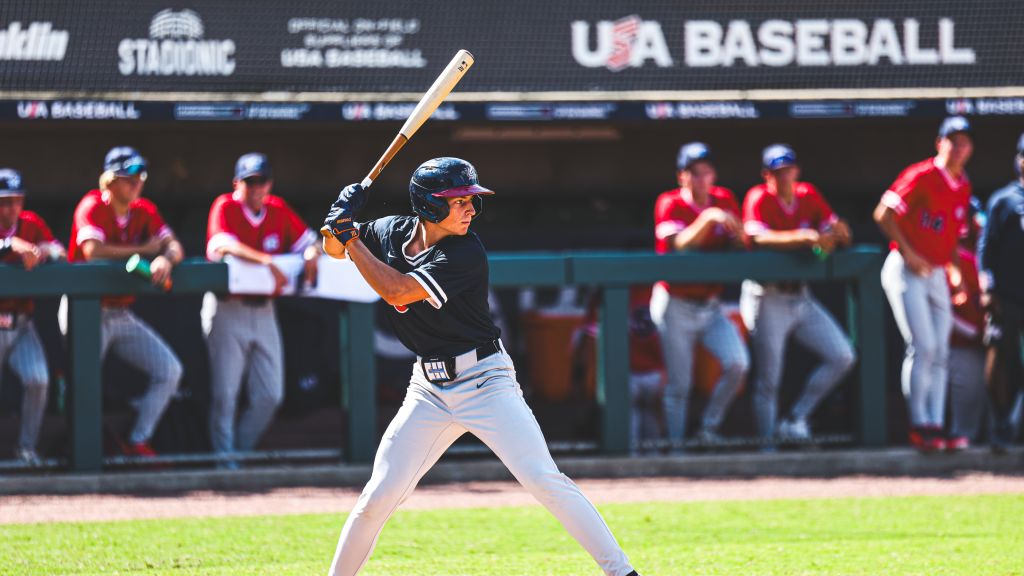
In baseball, moving from 12U to 13U doesn’t just mean turning a year older, it also means making the move from Little League fields to full sized ones. Base paths go from 60 feet to the standard 90, and a six-inch mound 46 feet away from the batter's box becomes a 10-inch hill that sits 60 feet away.
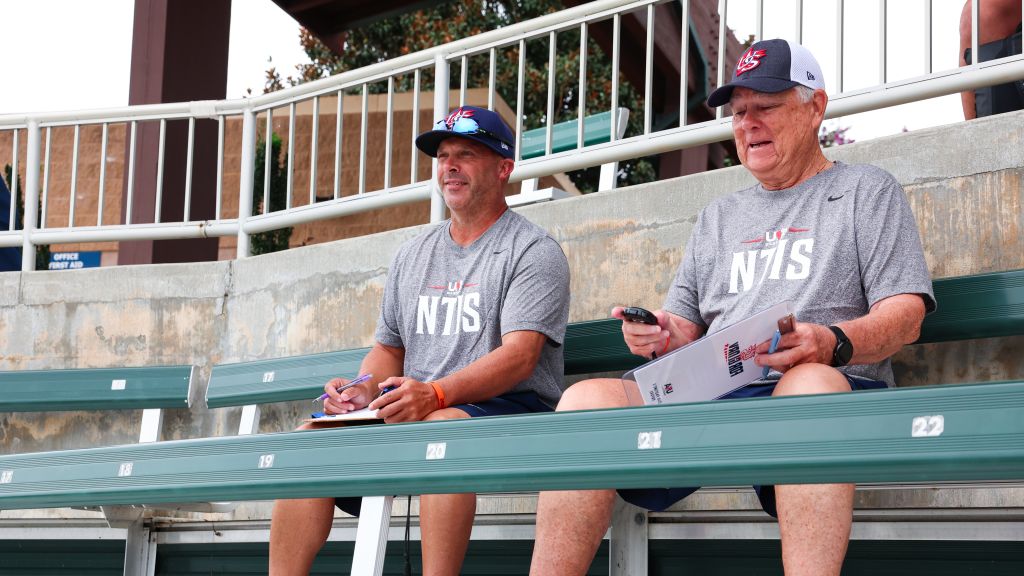
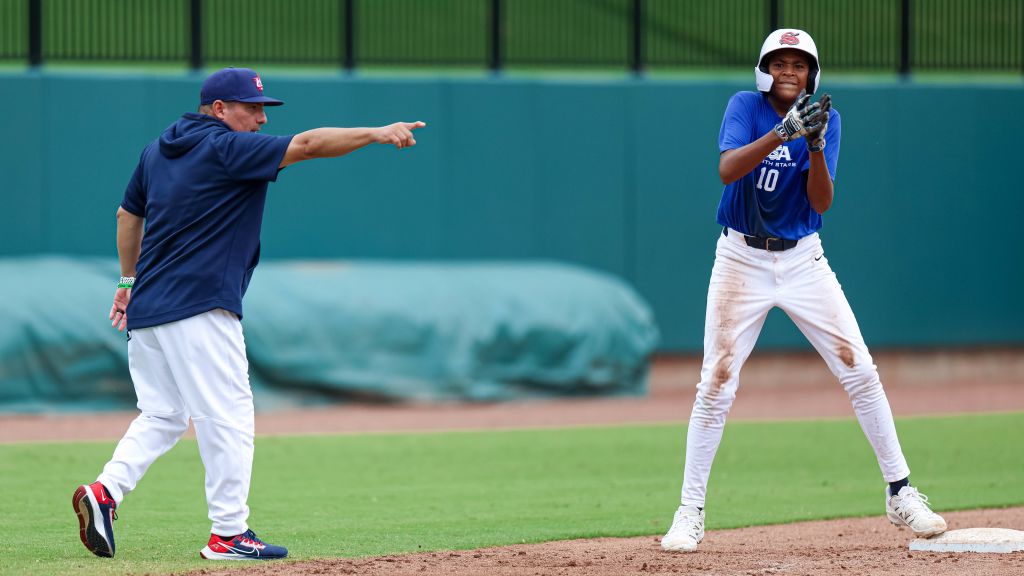
Each year, USA Baseball’s National Team Identification Series (NTIS) Task Force convenes in Cary, North Carolina, for the 12U NTIS Champions Cup to look for the talent they think will continue to perform at a high level when they make the move to the larger field. The Task Force spends the week at Thomas Brooks Park carefully evaluating the 12-and-under players and deciding who will receive an invitation to the following year’s 13U/14U Athlete Development Program.
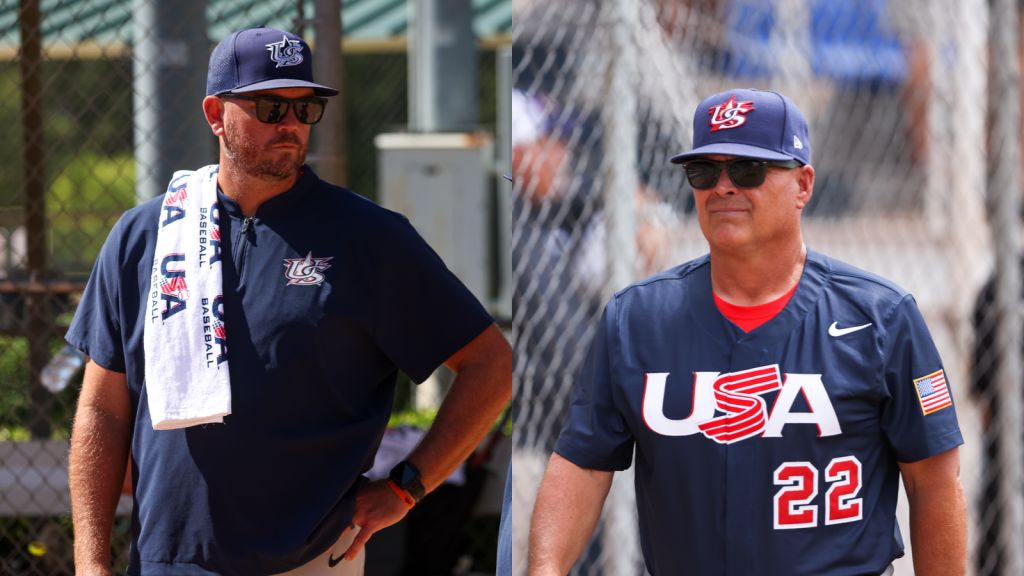
Armed with a breadth of knowledge and experience, members of this year’s Task Force, David Sharp and Eric Brown, know exactly what to look for in the search for the next generation of elite talent.
“For us, I think it's just using our baseball experience and trying to project if what we see on the little field will translate to the big field,” Brown said. “I'm not going to say that we're guessing, but it's more so trying to really go back to our experience and say, ‘Alright, I think this player will be good and will be able to make that jump.”
This year marks Brown’s fourth time on the NTIS Task Force and earlier this summer, he served as an assistant coach at 12U National Team Training Camp for the second time. Despite having years of coaching experience under his belt, Brown didn’t know what to expect in his first year, but working with other coaches and returning year after year has helped shape his approach to talent evaluation.
“I had a really good guy on the task force, Steve Stone, who took me under his wing and showed me how USA Baseball [does things], what kind of notes they want you to take on those kids, what you should look for, things you shouldn't look for. He really helped out a lot,” Brown said. “Then, coming back and being able to do the [12U] Training Camp when Bryan Madsen was manager last year, being able to see the end result of the type of player that they wanted on their national team, I think that really helped me because now I have a better idea of what they are looking for to try to go win a gold medal.”
It's Sharp's first time on the Task Force, but he’s no stranger to finding elite talent. He’s brought home three gold medals as a coach for the 12U National Team, one in 2015 as an assistant and two as manager in 2017 and 2023. Though he isn’t assembling a team for international competition this summer, he’s still looking for the type of player that has the potential to be selected for a national team in the future.
“Across this country, there are plenty of very, very talented players, and we're looking for that right fit,” Sharp said. “What is that? It's a guy that is a good teammate. First off, it's a guy that can handle success and handle failure. In my eyes, it's a guy that plays the game the right way. He gets on the field the right way. He gets off the field the right way.”
But this is just one of many variables the Task Force takes into consideration. Since the 12U players will make the move to a larger field in the upcoming months, they also consider how their current offensive and defensive skills will transfer over.
“When you see a kid that is advanced at 12 years old, and he goes up and takes a BP round, he’s not just [hitting] everything to the pull side. He's hitting lasers back up the middle, line drives back to the middle,” Sharp said. “I think that is a kid that you really have to keep tabs on because that advanced approach at that young age, being able to drive the ball back up the middle, translates very well in his progression as a player.”
As a former pitcher himself, Brown notes that moving to a larger field can have an impact on a player’s defensive ability since they’ll have to execute their throws from longer distances.
“The speed of the game is going to seem slower because the bases are further away and the field is bigger, so we just look for [a few things in] a position player; if they have carry on the ball, if they can backspin it, really good arm strength. If we feel like that ball will carry, we think that they can play on the bigger field at that level,” said Brown. “With the pitcher, that's a pretty big jump. It may not seem like it with the few feet that they're jumping back, but we'll rely on our eye test and what we see from a shorter distance. You can also lean on those analytics, see the velocity and the spin rate. If all those things are there, then we can feel confident that they would be able to adjust to that new distance.”
Although the Task Force takes offensive, defensive and interpersonal skills into consideration as they complete their evaluations, there is no recipe or formula that makes up the ideal player. At the end of the day, the ideal player is someone who will continue to work hard and maintain a positive attitude regardless of the size of the field.